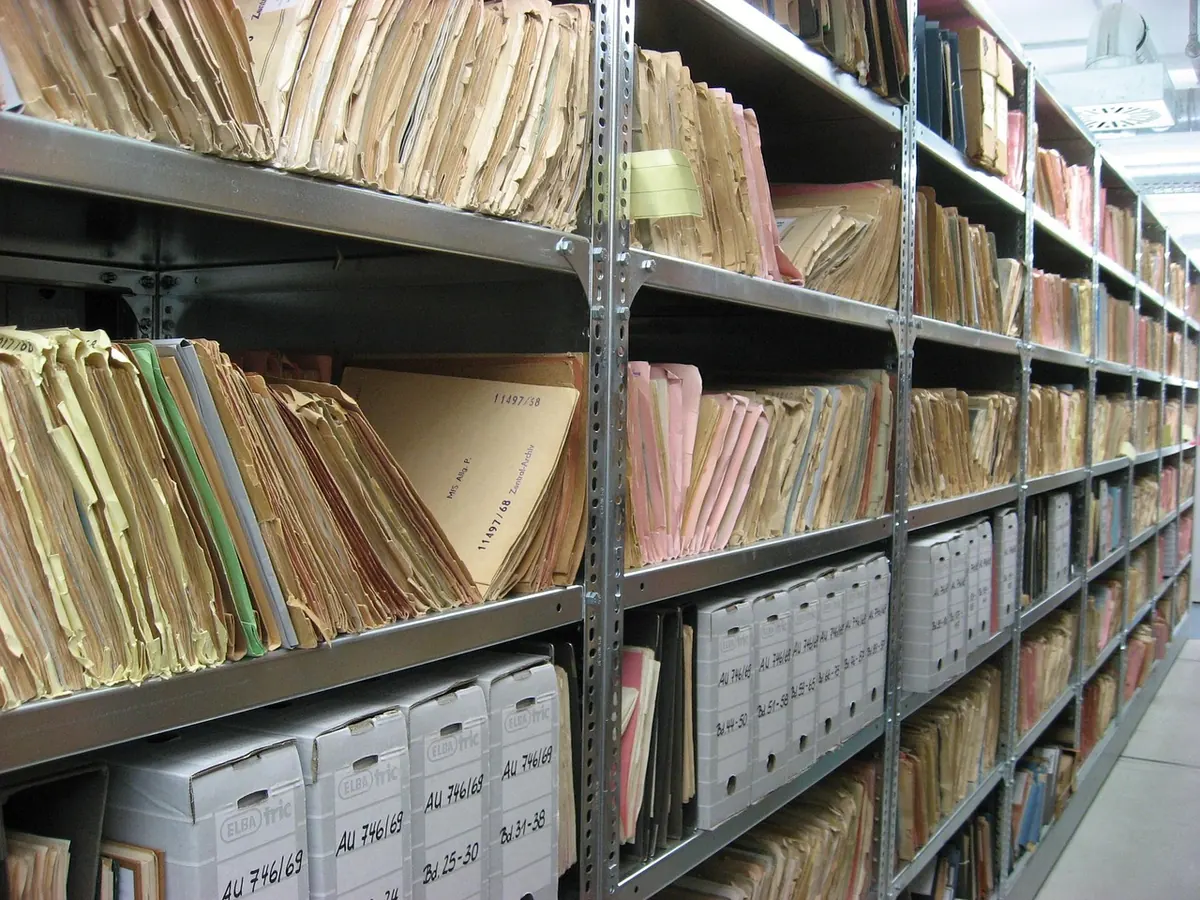
Paper Filing for Beginners: Build a Home Filing System in One Afternoon

Every home has one: a drawer, a shoebox, or a stack on the corner of the desk that has quietly turned into a geological formation. Paper arrives whether or not you asked for it — receipts, renewal notices, school forms, the warranty for a kettle you replaced two years ago. The fix doesn't take a lost weekend. It takes an afternoon, a box of folders, and roughly a dozen decisions.
Start by Gathering, Not Sorting
Before you file anything, collect it. Walk through the house with a laundry basket and pick up every loose paper: the mail pile by the door, the drawer under the microwave, the stack behind the laptop. Set a timer for fifteen minutes and stop when it rings. Speed matters here. Start reading and you'll stall.
Leave other people's paper alone. If your partner's desk is buried in receipts, that's a separate project and a separate conversation.
Keep one tray marked "Not mine, not now" for items that belong to someone else or need a decision you can't make today. It empties faster than you'd expect.
Sort Into Three Piles, Then Categories
Now sit down with the whole stack and make only three decisions. This is where most people go wrong: they try to work out what a document is and whether to keep it at the same time, and end up with forty piles and no progress.
- Act. Anything with a deadline or a payment attached — a bill, a form to sign, a renewal. It goes in a single action tray so it can't hide inside a folder.
- Keep. Reference material you'll genuinely need again: insurance policies, warranties, medical records, contracts.
- Recycle or shred. Everything else.
Shred anything showing an account number, your signature, your date of birth, or medical details. A basic cross-cut shredder handles a household's worth of paper in a few minutes, and it's worth checking whether your local area runs periodic shredding events before you buy one.
Be honest about the keep pile. The manual for an appliance you sold, a receipt for a cash purchase three years ago, a newsletter you never read — none of that needs a folder.
Choose Categories You'll Actually Use
The right number of categories for most households sits somewhere between ten and fifteen. Fewer and everything lands in Miscellaneous. More and you'll stand in front of the drawer unable to decide where a document belongs, which is how filing systems die.
A workable starter set:
- Housing — lease or mortgage, property tax, repairs
- Utilities and services
- Insurance — home, health, auto, life
- Medical and health records
- Financial — bank accounts, credit cards, investments
- Taxes
- Employment and income
- Vehicle and transport
- Warranties and manuals
- Education and children
- Pets
- Travel and identification
Adjust the list to fit your life. If you freelance, you probably need a business folder; if you rent, you don't need one for property tax. Two rules keep it clean: never create a folder for a single piece of paper, and only add a subfolder once the parent folder is more than an inch thick.
Birth certificates, passports, wills and similar irreplaceable documents don't belong in a general drawer. Keep them together in a fireproof box or safe, somewhere you'd remember in a hurry.
Folders, Labels, and a Layout That Works
Build the structure
Hanging folders form the frame; manila folders inside them handle the subdivisions. Put the category name on the hanging folder's tab and the subcategory on the manila tab, one position to the right so the eye can follow it. Write in the same direction on every tab, and use printed labels if your handwriting wanders. "Misc 2" isn't a label, it's a warning sign.
No cabinet? A portable file box with a lid does the same job. Colour-coding is optional but useful: one colour for money, one for home, one for health, one for people.
Lay out the cabinet
Put the folders you touch most often where you can reach them without bending: the top drawer of a two-drawer cabinet, or the second drawer of a four-drawer one. Heavy, rarely used material — archived tax returns, old manuals — goes at the bottom.
Then pick one ordering rule and never break it. Alphabetical works well in shared households because anyone can find anything. Ordering by frequency is faster for one person and baffling for everyone else.
A few finishing touches: tape a printed index of the categories inside the drawer, leave a couple of inches of empty space for growth, and keep the action tray on top of the cabinet rather than inside it.
Keep It From Piling Up Again
A system that only works on the day you build it isn't a system. Three habits do most of the work:
- Open mail standing next to the recycling bin, and deal with it before it touches a surface.
- Handle each sheet once — file it or act on it, not both. If it needs action, it goes in the tray, not into a folder where you'll forget it.
- Spend ten minutes a week on the action tray and the mail pile. Friday afternoon suits a lot of people; pick whatever day you'll actually remember.
Where you can, stop paper at the source. Switch bills and statements to email, and opt out of catalogues you never read. A warranty saved to a folder on your computer is easier to find than a slip of paper in a drawer.
The One-Afternoon Test
Six months from now, the system is working if you can put your hand on any document in under a minute without emptying a drawer. Test it occasionally: pick something at random — a car insurance policy, last year's tax return, the washing machine warranty — and time yourself.
If you can't find it, don't reorganize everything. Fix the one category that failed, relabel it, and move on. Filing systems don't need to be perfect; they need to be findable.
One practical note on how long to keep things: retention rules vary by country and by situation, especially for tax and legal records. When you're unsure about a specific document, check with an accountant or a lawyer rather than guessing.
Photo: myrfa / Pixabay